**By Steph Swarts, RMT, CNP** *Registered Massage Therapist | Certified Naturopathic Practitioner* 📅 Last Updated: January 14, 2026 ✅ Evidence-based recommendations from a licensed healthcare professional
Introduction: Why Hand Strength for Massage Therapists Matters More Than Ever in 2026
When I first started my massage therapy career 17 years ago, I thought my hands were invincible. I’d power through 6-8 deep-tissue sessions daily, convinced the soreness would eventually disappear. That was a costly mistake that nearly ended my career.
In 2026, the landscape for massage therapists has evolved significantly. The global wellness economy reached $6.8 trillion in 2024 and is forecast to hit $9.8 trillion by 2029, growing at 7.6% annually according to the Global Wellness Institute. Employment of massage therapists in the U.S. is projected to grow 15% from 2024 to 2034—much faster than average for all occupations—creating approximately 24,700 job openings annually.
However, the statistics on hand injuries remain alarming: research published in peer-reviewed journals confirms that 65-75% of massage therapists experience hand or wrist pain, with 85% experiencing work-related pain somewhere in their body. A Canadian study of 1,103 massage therapists found that 65.5% reported hand/wrist pain as their most common site of work-related pain, followed by 60.3% experiencing finger/thumb pain.
Building and maintaining hand strength for massage therapists isn’t about ego or showing off technique—it’s the critical difference between sustaining a fulfilling 20-30 year career and being forced into early retirement at 35 because your hands failed you. Studies show that 19% of massage therapists cut back on work hours due to injury, and 18% have considered leaving the profession entirely because of injury or fear of injury.
This comprehensive guide shares evidence-based strategies, current research, and practical techniques I’ve developed over nearly two decades of practice to protect your most valuable professional asset: your hands.
Quick Comparison: Effective vs. Ineffective Hand Strengthening Approaches
| Method | Effectiveness | Injury Prevention | Career Sustainability | Time Investment | Evidence-Based |
|---|---|---|---|---|---|
| Balanced Strength & Flexibility Training | ✓✓✓ | ✓✓✓ | ✓✓✓ | 15-20 min/day | ✓ Yes |
| Grip Strengtheners Only | ✓✓ | ✗ | ✓ | 5-10 min/day | ✓ Partial |
| Proper Body Mechanics Training | ✓✓✓ | ✓✓✓ | ✓✓✓ | Initial learning curve | ✓ Yes |
| Ignoring Extension Exercises | ✗ | ✗✗ | ✗✗ | N/A | ✗ No |
| Using Massage Tools Strategically | ✓✓ | ✓✓✓ | ✓✓✓ | Integrated into sessions | ✓ Yes |
| Pushing Through Pain | ✗✗ | ✗✗✗ | ✗✗✗ | N/A | ✗ Harmful |
| Adequate Recovery Time Between Clients | ✓✓✓ | ✓✓✓ | ✓✓✓ | 15-20 min breaks | ✓ Yes |
| Nutrition & Supplementation Support | ✓✓ | ✓✓ | ✓✓ | Daily routine | ✓ Yes |
This comparison chart shows evidence-based approaches to building hand strength for massage therapists and their relative effectiveness for injury prevention and career longevity.
Why Hand Strength for Massage Therapists Actually Matters More Than You Think
Hand strength for massage therapists represents one of the most critical yet overlooked aspects of professional longevity. According to research published in BMC Musculoskeletal Disorders, 85% of Canadian massage therapists have experienced work-related pain, with hand/wrist being the most common site at 65.5%, followed by fingers/thumb at 60.3%.
The biomechanics of what we do are demanding on the hands. Research on body mechanics for massage therapists shows that during therapeutic work, therapists can generate forces ranging from 10-40 pounds depending on posture and technique. When using poor posture, a therapist might only be able to generate 28 pounds of force, but with proper body mechanics, they can generate 40 pounds—a significant difference that determines whether work leads to injury or longevity.
Here’s the critical insight most therapists miss: when your hands fatigue or weaken, your body automatically compensates through maladaptive movement patterns. You’ll unconsciously hyperextend your wrists, overuse your thumbs in vulnerable positions, or recruit your shoulders inappropriately. Research shows that one-year prevalence of wrist and hand pain among physical therapists performing manual therapy reaches 75%, with soft-tissue mobilization being the most frequently cited causative factor.
These compensatory mechanisms are where the serious, career-threatening damage occurs. Studies indicate that thumb injuries alone account for more than 50% of all hand-related problems among manual therapists. Understanding hand strength for massage therapists means recognizing these patterns before they cause permanent injury.
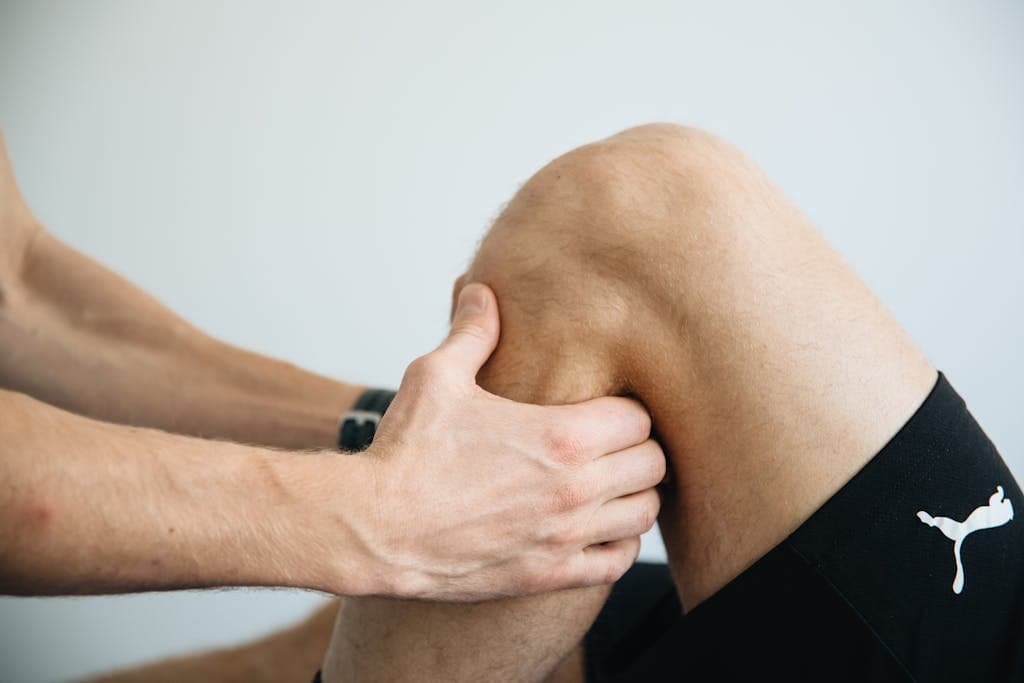
The Biggest Mistakes Massage Therapists Make With Their Hands
After 17 years in practice and consulting with hundreds of RMTs about hand health, I’ve identified these recurring, career-damaging mistakes:
Mistake #1: Relying Exclusively on Hand and Thumb Force
The most common error I observe is therapists attempting to generate all pressure through raw hand strength for massage therapists. You’re essentially trying to force through multiple layers of muscle, fascia, and connective tissue using only finger and thumb power. This approach guarantees rapid hand deterioration.
The biomechanically sound alternative involves using body weight and leverage systems. Research demonstrates that therapists using good posture can work at 25% of their maximum voluntary contraction (MVC) to deliver adequate pressure, while those with poor posture may need to work at 89% MVC for the same result—dramatically increasing fatigue and injury risk.
Mistake #2: Chronically Hyperextending Your Thumbs
I see this constantly: therapists bending their thumbs backward during deep pressure work, mistakenly believing this improves contact quality. In reality, you’re systematically overstretching the ulnar collateral ligament and establishing the perfect conditions for De Quervain’s tenosynovitis—a painful inflammatory condition affecting the thumb’s tendon sheath.
Your thumbs should maintain a relatively neutral position during all techniques. When you need deeper pressure, leverage your body weight or incorporate tools rather than forcing your thumbs into compromised positions.
Mistake #3: Maintaining Excessive Grip Tension During Work
Whether holding massage stones, grasping tools, or performing compressions, many therapists employ unnecessarily tight grips. You don’t need to strangle every implement you touch. Excessive tension wastes energy, accelerates fatigue dramatically, and increases inflammation in your hand tissues.
Practice maintaining firm but relaxed grips throughout all techniques.
Mistake #4: Neglecting Finger Extension Exercises Completely
Throughout each workday, you’re predominantly flexing and gripping, which overdevelops your flexor muscles while your extensors become progressively weaker. This muscular imbalance is a primary driver of repetitive strain injuries in massage therapists.
Incorporating finger extension exercises using rubber bands takes approximately two minutes daily but prevents countless overuse injuries by maintaining balanced strength ratios in your hands and forearms.
Mistake #5: Ignoring Early Warning Signs and Pain Signals
This was my most damaging mistake early in my career. I’d experience thumb pain or wrist discomfort and convince myself it would resolve with weekend rest. By the time you’re experiencing consistent pain, tissue damage has already occurred and pathological changes have begun.
If any hand, wrist, or thumb pain persists beyond 2-3 days, you must modify your technique immediately or seek professional evaluation. Don’t compound initial damage by pushing through warning signals your body is sending.
Mistake #6: Inadequate Recovery Time Between Client Sessions
When I started practicing, I’d schedule clients back-to-back with maybe five minutes between sessions. This scheduling approach doesn’t allow sufficient time for metabolic waste clearance and inflammatory mediator dispersal from your hand tissues.
Current research on hand strength for massage therapists indicates your muscles require at least 10-15 minutes between intensive sessions for adequate recovery. I personally build 45-minute breaks into my schedule, and my hands feel dramatically better throughout the workday and at week’s end.
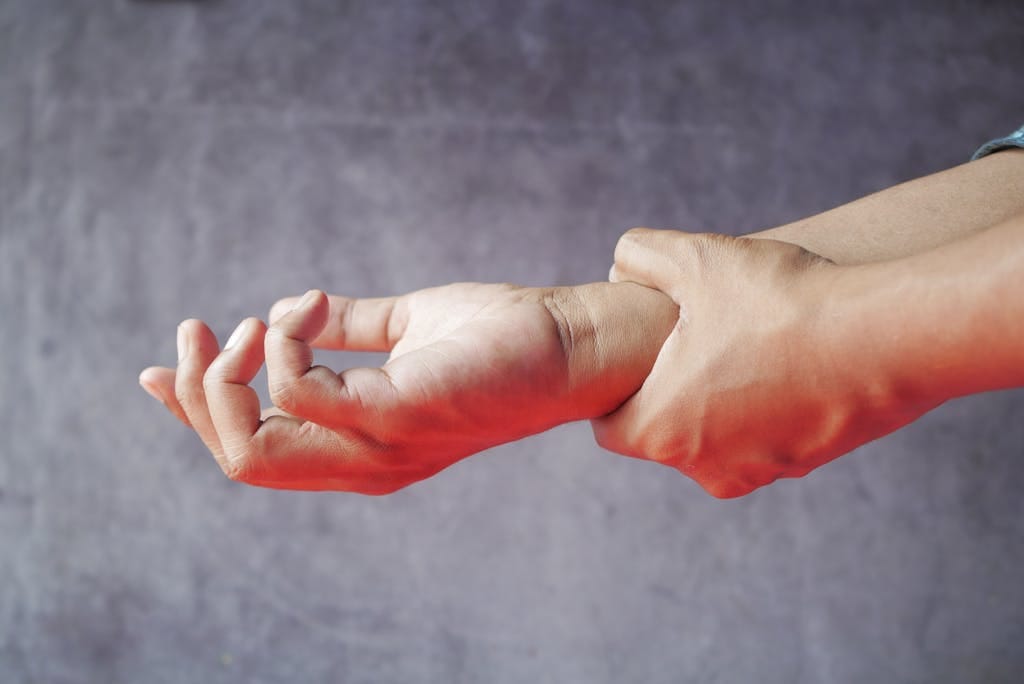
The Career-Ending Injuries You Must Prevent
Understanding the specific pathologies that end massage therapy careers is essential for developing effective prevention strategies:
Carpal Tunnel Syndrome involves compression of the median nerve within the carpal tunnel of your wrist, causing numbness, tingling, weakness, and pain in your thumb, index, middle, and part of your ring finger. Carpal tunnel syndrome represents 32.5% of repetitive motion injuries in the workplace.
De Quervain’s Tenosynovitis represents inflammation of the tendons controlling thumb movement, particularly the abductor pollicis longus and extensor pollicis brevis. This condition is exceptionally common among bodyworkers who perform extensive thumb work. I developed a mild case several years ago—the pain was severe enough that I couldn’t open jars or perform basic daily activities without wincing.
Trigger Finger (Stenosing Tenosynovitis) occurs when your finger locks in a bent position and requires manual straightening. This results from inflammation in the tendon sheath creating mechanical catching or locking during finger movement. It’s directly caused by repetitive gripping and grasping motions inherent in massage therapy work.
Tendinosis affects the extensor tendons and wrist flexors, characterized by collagen degeneration from extensive and repetitive overload on the tendon. This condition develops from chronic muscle-tendon overload.
The particularly concerning aspect of these conditions is their insidious development pattern. You don’t wake up one morning with full-blown carpal tunnel syndrome—it develops gradually over months and years of cumulative microtrauma. By the time symptoms become obvious, significant tissue damage has already occurred, making prevention infinitely superior to treatment.
Building Hand Strength for Massage Therapists: Evidence-Based Exercise Protocols
Developing effective hand strength for massage therapists requires systematic, balanced programming that addresses all components of hand function:
Grip Strengthening Protocols
Grip strength forms the foundation of hand conditioning. Use therapy putty in progressive resistance levels—beginning with yellow (extra soft) and advancing through red (soft), green (medium), blue (firm), and black (extra firm) as your strength improves.
Protocol: Perform full fist squeezes, holding peak contraction for 5-10 seconds, then releasing slowly. Complete 10-15 repetitions, three sets daily. Progress to the next resistance level when you can comfortably complete all sets with proper form.
Finger Extension Exercises (Critical and Often Neglected)
Most therapists focus exclusively on grip strengthening while completely ignoring extensor development. This creates the precise muscular imbalances that drive repetitive strain injuries.
Protocol: Place rubber bands around your fingers at various positions (around all fingertips, around fingers at the first knuckle, etc.). Spread your fingers against the band’s resistance, hold for 3-5 seconds, then return to start position. Perform 15-20 repetitions, 2-3 sets daily.
Thumb Opposition and Strengthening
Thumb strength is absolutely critical for hand strength for massage therapists, particularly for those performing trigger point therapy, deep tissue work, or myofascial release techniques.
Protocol: Using therapy putty, practice pinch grip exercises between your thumb and each individual finger. Squeeze firmly, hold 3-5 seconds, release. Complete 10 repetitions for each thumb-to-finger combination. Perform 2-3 sets daily.
Wrist Stability and Conditioning
Wrist stability directly impacts hand function and injury prevention. Weak or unstable wrists force your hands to work harder and in compromised positions.
Protocol: Wrist curls (palms up) and reverse wrist curls (palms down) using light dumbbells (start with 2-5 pounds). Perform 3 sets of 15 repetitions, 3-4 times weekly. Focus on controlled movement through full range of motion rather than using momentum.
Your Forearms: The Hidden Driver of Hand Strength for Massage Therapists
Here’s something most therapists don’t fully appreciate: the muscles that control your fingers and thumb are actually located in your forearms, connected to your digits through long tendons. When your forearms are properly conditioned, your hands can sustain work for significantly longer periods without fatiguing.
Farmer’s Carries
This simple exercise is perhaps my single favorite forearm strengthening protocol. Grab heavy dumbbells (start with whatever weight challenges you while maintaining form) and walk for 30-60 seconds. Your grip will burn intensely, but that burning sensation indicates you’re building the exact endurance required for sustained massage work.
Protocol: Perform 3-4 sets with 60-90 seconds rest between sets. Progress by gradually increasing weight or carry duration.
Dead Hangs
Dead hangs from a pull-up bar develop tremendous grip endurance and forearm strength simultaneously. Simply hang from the bar maintaining your grip for as long as possible.
Protocol: Perform 3-4 hangs to near-failure, 2-3 times weekly. Record your hang times and aim to progressively increase duration over weeks and months.
Pronation and Supination Exercises
These rotational movements build the muscles that stabilize your wrist during the varied hand positions required in massage therapy work.
Protocol: Hold a light dumbbell by one end (or use a hammer for convenience) and rotate your wrist through full pronation (palm down) and supination (palm up). Perform 15-20 repetitions in each direction, 2-3 sets, 3-4 times weekly.
Flexibility and Mobility: Essential Components of Hand Strength for Massage Therapists
Building strength without maintaining flexibility creates tight, injury-prone tissues. Strong, flexible tissues significantly outperform strong, restricted tissues for both performance and injury resistance.
Daily Finger and Thumb Stretches
I perform these stretches every single morning and between every client. Gently pull each finger backward toward your wrist, holding the stretch for 15-20 seconds. Repeat with your thumb. These simple stretches take 2-3 minutes but dramatically reduce hand stiffness and maintain optimal tissue extensibility.
Wrist Mobility Drills
Perform slow, controlled wrist circles in both directions—10 repetitions clockwise, 10 repetitions counterclockwise. This maintains synovial fluid distribution and joint nutrition while preventing the stiffness that accumulates during repetitive work.
Prayer Stretches
Press your palms together in front of your chest, then slowly lower your hands toward your waist while maintaining palm contact. You’ll feel a significant stretch through your wrists, forearms, and the palm-side of your hands. Hold for 30 seconds, repeat 3-4 times. This stretch effectively addresses the flexor tightness that develops from repetitive gripping activities.
Self-Myofascial Release
Use a lacrosse ball or small massage ball to perform self-myofascial release on your forearms. Roll slowly along the muscle belly, pausing on tender points for 20-30 seconds to allow tissue release. For palm work, press the ball against a wall and roll your hand over it, applying pressure to address the intrinsic hand muscles.
I perform 5-10 minutes of self-myofascial release daily, and it’s transformed my hand recovery and reduced next-day soreness substantially.
Strategic Tool Integration to Preserve Hand Strength for Massage Therapists
I used to think incorporating massage tools meant I wasn’t performing “real” massage therapy. That perspective was both prideful and professionally damaging.
Intelligent tool use allows you to deliver effective treatments while giving your hands periodic recovery intervals during sessions. Your clients receive excellent therapeutic results while your hands aren’t absorbing all the mechanical stress.
Manual Massage Tools
T-bars, knuckle tools, and massage stones can substitute for many hand-intensive techniques. Use stones for broad compressions along the erector spinae, or employ a T-bar for precise trigger point work. These tools don’t compromise treatment quality—they preserve your hands for the techniques that genuinely require direct manual contact.
Percussion Therapy Devices
Devices like Theragun or Hyperice have become ubiquitous in clinical practice. While research on their therapeutic superiority compared to skilled manual therapy remains mixed, they unquestionably reduce mechanical load on your hands. I use percussion devices for pre-treatment warm-up work and for clients who respond well to vibrational input.
Cream and Oil Selection Impact on Hand Fatigue
The lubrication products you use significantly affect hand fatigue. Products with superior glide characteristics reduce friction and the force required to perform strokes. I switched to a higher-quality oil called OrthoEase several years ago and noticed measurably less hand fatigue by day’s end.
Don’t underestimate how much product selection affects your hand workload over thousands of treatment hours annually.
Recovery Protocols: The Other Half of Hand Strength for Massage Therapists
Building strength represents only half the equation. Strategic recovery is equally critical for maintaining hand health throughout a long career.
Post-Session Cold Application
I apply ice packs or immerse my hands in cold water for 5-10 minutes after each treatment session. Cold application rapidly reduces inflammatory mediators and tissue swelling, accelerating recovery between clients.
Some therapists prefer heat for its muscle-relaxing properties. Both modalities work—find what produces the best subjective recovery response in your hands.
Self-Massage Protocols
I perform self-massage on my hands and forearms daily, typically in the evening. Cross-fiber friction along the forearm flexors and extensors, targeted work on the thenar and hypothenar eminences, and gentle finger traction all contribute to faster recovery and reduced next-day stiffness.
This self-care takes approximately 5-10 minutes but yields substantial benefits for maintaining hand strength for massage therapists over time.
Contrast Bath Therapy
Contrast baths—alternating between hot and cold water immersion—enhance circulation and accelerate metabolic waste removal from tissues. Use water temperatures of approximately 100-105°F (hot) and 50-60°F (cold).
Protocol: 3 minutes hot, 1 minute cold, repeated 3-4 times, always ending with cold. Perform 2-3 times weekly or after particularly demanding work days.
Nutritional Support for Optimizing Hand Strength for Massage Therapists
Nutrition profoundly impacts tissue health, recovery capacity, and injury resistance. What you consume directly affects your hands’ ability to withstand the mechanical demands of massage therapy work.
Anti-Inflammatory Nutrition
Chronic, low-grade inflammation accelerates tissue degeneration and increases injury susceptibility. Fatty fish (salmon, mackerel, sardines) provide high concentrations of omega-3 fatty acids (EPA and DHA) that reduce inflammatory signaling pathways. Research demonstrates that omega-3 supplementation can reduce joint pain and stiffness in individuals with inflammatory joint conditions.
I consume fatty fish 3-4 times weekly and supplement with high-quality fish oil on non-fish days to maintain consistent anti-inflammatory support.
Hydration for Tissue Health
Adequate hydration is essential for tendon, ligament, and joint capsule health. Dehydrated connective tissues become brittle and injury-prone. I target 80-100 ounces of water daily, adjusting upward on heavy training or work days.
Collagen Synthesis Support
Vitamin C and zinc are required cofactors for collagen synthesis—the process your body uses to build and repair connective tissues including tendons and ligaments.
Excellent vitamin C sources include citrus fruits, bell peppers, strawberries, broccoli, and leafy greens. Zinc is abundant in meat, shellfish, legumes, seeds, and nuts. I ensure adequate intake of both through whole foods and targeted supplementation when necessary.
Protein for Tissue Repair and Adaptation
Your hands require adequate protein to adapt to training stimulus and repair micro-damage from daily work. I consume approximately 0.7-1.0 grams of protein per pound of body weight daily, distributed across 3-4 meals for optimal muscle protein synthesis.
Consider Strategic Supplementation
While whole foods should form your nutritional foundation, certain supplements offer additional support for tissue health and recovery. Creatine supplementation, traditionally associated with athletic performance, also supports cellular energy production in working tissues and may enhance recovery between sessions. Research on creatine’s benefits for overall tissue health and recovery continues to expand, making it worth considering as part of a comprehensive hand health strategy for massage therapists.
Collagen peptide supplementation (typically 10-15 grams daily) may support tendon and ligament health, though research quality varies. Curcumin (from turmeric) demonstrates anti-inflammatory properties in research, though bioavailability can be challenging without formulations containing piperine (black pepper extract) or other absorption enhancers.
Consult with a qualified healthcare practitioner before initiating any supplementation protocol to ensure appropriateness for your individual circumstances.

Building a Sustainable Practice Around Hand Strength for Massage Therapists
Long-term career sustainability requires thinking beyond today’s or this week’s schedule. You must consider whether you’ll still be capable of performing this work in 10, 15, or 20 years.
Strategic Session Scheduling
I deliberately limit deep tissue or intensive myofascial work to maximum three sessions daily, strategically interspersed with lighter-demand modalities like Swedish massage, prenatal massage, or lymphatic drainage. My hands require variety and recovery time between high-intensity sessions.
This scheduling approach might seem financially limiting initially, but maintaining hand health for 25-30 years generates far more lifetime income than burning out your hands in 10 years working unsustainable schedules.
Service Menu Diversification
Incorporating less hand-intensive modalities into your practice creates schedule variety while protecting your hands. Consider adding cupping therapy, percussion device treatments, hot stone massage, or other modalities that reduce direct hand strain while still providing valuable therapeutic benefits.
The Long-Term Financial Reality
Consider this calculation: Working 30-35 treatment hours weekly while maintaining excellent hand health enables a 25-year career. Working 40-45 hours weekly and developing serious hand problems within 10 years means you’ve lost 15 years of income and career satisfaction.
The financially optimal strategy often involves working slightly fewer hours with superior hand health maintenance, extending career duration dramatically.
When to Seek Professional Help
If you’re experiencing persistent hand pain, numbness, tingling, or weakness that doesn’t improve with 1-2 weeks of rest and self-care modifications, you need professional evaluation. Don’t wait until problems become severe.
Hand surgeons or orthopedists specializing in upper extremity injuries can accurately diagnose conditions like carpal tunnel syndrome, tendonitis, or arthritis and recommend evidence-based treatment protocols. Physical therapists with hand therapy specialization can assess your biomechanics, identify problematic movement patterns, and design rehabilitation programs specific to your needs.
Also, practice what you preach: receive regular professional massage work on your own hands and forearms. Having another skilled therapist address your tissue quality and restrictions is invaluable.
Frequently Asked Questions About Hand Strength for Massage Therapists
1. How long does it take to build effective hand strength for massage therapists?
With consistent daily exercise protocols (15-20 minutes per day), most therapists notice measurable improvements in grip strength and endurance within 4-6 weeks. Significant strength gains typically occur over 8-12 weeks of progressive training. However, hand conditioning is an ongoing process throughout your career, not a destination you reach and then stop working on. Maintenance requires continued regular exercise to preserve gains.
2. Can I continue working while experiencing mild hand pain?
Mild discomfort that resolves within 24-48 hours is generally acceptable. However, pain persisting beyond 2-3 days signals tissue damage requiring intervention. Continuing to work through persistent pain typically worsens the underlying problem and extends recovery time. Modify your technique, reduce session intensity, incorporate more tool use, and seek professional evaluation if pain doesn’t resolve quickly. Never push through sharp, severe, or progressively worsening pain.
3. What’s the single most important exercise for hand strength for massage therapists?
While no single exercise addresses all aspects of hand conditioning, finger extension exercises using rubber bands are arguably most critical because they’re most commonly neglected. Most therapists naturally develop their flexor muscles through daily work but rarely train extensors, creating the muscular imbalances that drive repetitive strain injuries. If you only have time for one daily exercise, make it finger extensions—15-20 reps, 2-3 sets.
4. How many deep tissue sessions can I safely perform per day?
This varies by individual conditioning, technique efficiency, and recovery capacity, but 3-4 intensive deep tissue or myofascial sessions per day represents a reasonable sustainable limit for most therapists. Intersperse high-intensity sessions with lighter modalities, ensure 15-20 minute recovery breaks between clients, and pay close attention to your hands’ feedback. If you’re consistently experiencing hand fatigue or pain with your current schedule, reduce session frequency or intensity immediately.
5. Are grip strengthener tools effective for building hand strength for massage therapists?
Grip strengtheners develop crushing grip strength effectively but address only one component of comprehensive hand conditioning. They’re useful tools within a balanced program but insufficient alone. You must also incorporate finger extension work (often neglected), thumb strengthening, wrist stability exercises, forearm conditioning, and flexibility training. Using only grip strengtheners while ignoring other elements can actually worsen muscular imbalances and increase injury risk.
6. Should I use cold or heat for hand recovery after sessions?
Both modalities offer benefits, and optimal choice often depends on individual response. Cold application (ice packs or cold water immersion for 5-10 minutes) rapidly reduces inflammation and swelling, making it excellent for immediate post-session recovery. Heat promotes muscle relaxation and increases blood flow, which some therapists find more beneficial for relieving stiffness. Experiment with both approaches and use whichever produces better subjective recovery in your hands. Contrast baths (alternating hot and cold) combine benefits of both.
7. What early warning signs indicate I’m developing hand problems?
Watch for these warning signals: persistent soreness or aching in hands, wrists, or forearms that doesn’t resolve within 48 hours; numbness or tingling in fingers (especially thumb, index, middle finger—suggesting median nerve involvement); weakness when gripping or pinching; stiffness upon waking that takes more than 10-15 minutes to improve; pain that increases progressively over days or weeks; clicking, catching, or locking sensations in fingers or thumbs. Any of these symptoms persisting beyond a few days requires technique modification and professional evaluation.
8. Can supplements really help with hand strength for massage therapists?
While supplements can’t replace proper training and technique, certain supplements support tissue health and recovery when combined with comprehensive hand conditioning programs. Omega-3 fatty acids (fish oil) reduce inflammation; vitamin C and zinc support collagen synthesis for tendon and ligament repair; adequate protein intake supports tissue adaptation. Collagen peptides may benefit connective tissue health, though research quality varies. Supplements work best as additions to—not replacements for—proper nutrition, hydration, exercise, and recovery protocols. Consult a qualified healthcare practitioner before starting supplementation.
9. How important is body mechanics compared to hand strength for massage therapists?
Body mechanics and hand strength are equally critical and synergistic—you need both for career longevity. Research demonstrates that superior body mechanics can reduce required effort from 89% of maximum voluntary contraction with poor posture to just 25% with proper posture for the same pressure application. However, even with perfect mechanics, your hands still require conditioning to withstand the sustained contractions and repetitive movements inherent in massage work. The optimal approach combines excellent body mechanics with systematic hand strengthening—neither alone is sufficient for maximum career sustainability.
10. What percentage of massage therapists actually experience serious hand problems?
Current research indicates 65-75% of massage therapists experience hand or wrist pain, with 85% experiencing work-related pain somewhere in their body. Specifically, 65.5% report hand/wrist pain and 60.3% experience finger/thumb pain according to a large Canadian study. Studies show that 19% of massage therapists cut back on work hours due to injury, and 18% have considered leaving the profession entirely. Among manual therapists, thumb injuries account for more than 50% of all hand-related problems. These statistics highlight why prioritizing hand strength for massage therapists from the beginning of your career is absolutely essential. Therapists who implement comprehensive hand conditioning programs, practice proper body mechanics, and schedule adequate recovery can dramatically reduce injury risk and significantly extend career longevity.
The Bottom Line on Hand Strength for Massage Therapists in 2026
Building and maintaining hand strength for massage therapists isn’t optional—it’s absolutely essential for career longevity and professional fulfillment. The research is clear: 65-75% of massage therapists experience hand/wrist pain, with 85% experiencing work-related pain somewhere in their body. Studies show that 19% cut back on work hours due to injury, and 18% have considered leaving the profession entirely.
Therapists who implement comprehensive hand conditioning programs, practice proper body mechanics (which can reduce required effort from 89% to 25% of maximum voluntary contraction), schedule strategic recovery time, and address nutritional support can dramatically reduce injury risk and extend career duration compared to those who don’t prioritize hand health.
Start incorporating these evidence-based strategies immediately, even if your hands currently feel fine. Prevention is infinitely easier, less expensive, and more effective than rehabilitation after injury has occurred.
After 17 years of clinical practice, I can definitively state: taking care of your hands today means you’ll still be performing the work you love twenty or thirty years from now. Your future self will thank you for the investment you make in hand strength for massage therapists starting right now.
About the Author

Steph Swarts, RMT, CNP
Steph Swarts is a registered massage therapist and certified naturopathy practitioner with 17+ years of clinical experience helping clients optimize their health through evidence-based supplementation and holistic wellness strategies.
Professional Credentials:
- Registered Massage Therapist (RMT) – Licensed in Ontario, Canada
- Certified Naturopathic Practitioner (CNP)
- Raindrop Technique Practitioner (RTP)
- 17+ years in clinical practice
- Specialized training in Prenatal Massage Therapy
Clinical Expertise:
“As a healthcare professional with naturopathic training, I evaluate supplements using the same rigorous standards I apply in client care. My recommendations prioritize:
✅ Safety: Thorough evaluation of quality and purity
✅ Evidence: Backed by peer-reviewed research
✅ Clinical relevance: Real-world effectiveness for performance and recovery
✅ Professional standards: Third-party testing and manufacturing quality
Over 17+ years, I’ve guided hundreds of clients through their health journey, injury recovery, and overall wellness. Every recommendation reflects my professional commitment to evidence-based natural health.
Professional Memberships:
- Registered Massage Therapist with CMTO
- Member of RMTAO
- Certified Naturopathy Practitioner with NCCAP, CPD, and CMA
- Raindrop Technique Practitioner with Institute Of Energy Wellness Studies
📧 Contact: [email protected]
🌐 Website: www.stephswarts.com
📱 Social: https://www.facebook.com/StephanieJSwarts
Professional Disclaimer: Information provided is for educational purposes based on clinical expertise and current research. This does not replace individualized medical advice. Consult your healthcare provider before starting any supplement regimen, especially if you have pre-existing conditions or take medications.