**By Steph Swarts, RMT, CNP** *Registered Massage Therapist | Certified Naturopathic Practitioner* 📅 Last Updated: January 14, 2026 ✅ Evidence-based recommendations from a licensed healthcare professional
When I first started practicing massage therapy in 2008, I thought I was invincible. I’d book myself solid with deep tissue clients and skip my own self-care. It wasn’t until I learned that most massage therapists leave the profession within 5-7 years that I realized I needed to change everything if I wanted to extend my massage therapy career beyond my thirties.
According to 2026 industry data, physical burnout is the primary reason therapists exit early. The U.S. Bureau of Labor Statistics projects 15-18% employment growth through 2034, meaning there’s huge demand for experienced therapists who know how to sustain their careers. By implementing 19 specific daily habits, you can extend your massage therapy career to 20+ years while maintaining your health and passion.
Quick Comparison: Career-Shortening vs. Career-Extending Habits
| Career Aspect | Career-Shortening Habits | Career-Extending Habits |
|---|---|---|
| Morning Routine | Rolling out of bed 15 minutes before first client | 15-20 minute warm-up with stretching and mobility |
| Daily Sessions | 6-8 clients back-to-back | 3-5 clients max with 15-20 min buffers |
| Body Mechanics | Using arm strength, reaching across table | Using body weight, moving around table |
| Self-Care | Occasional massage when in pain | Bi-weekly bodywork, 2-3x weekly strength training |
| Boundaries | Accepting late clients, no cancellation policy | Clear written policies, protected time off |
Scroll horizontally to view full table →
The Morning Routine That Actually Matters
To extend your massage therapy career, a proper 15-20 minute warm-up routine significantly reduces repetitive strain injuries. According to 2026 research, therapists with consistent morning routines experience 40% fewer overuse injuries.
Habit 1: Targeted Stretching – Spend 10-15 minutes on wrist circles, forearm stretches, and shoulder mobility. This isn’t optional when you want to extend your massage therapy career.
Habit 2: Core Strengthening – Just 5-10 minutes of planks and bird dogs daily builds stability that prevents over-reliance on arms and shoulders.
Habit 3: Shoulder Mobility – Three to five minutes of arm circles and rotator cuff exercises prevent years of chronic pain.
Habit 4: Wrist Warm-Ups – Wrist and hand injuries account for 35% of all massage therapy RSIs. Five minutes with resistance bands is essential prevention.

Body Mechanics Throughout Your Workday
Proper mechanics during and between sessions are crucial to extend your massage therapy career.
Habit 5: Neutral Spine Always – Squat instead of bending when changing linens. Keep items close when carrying supplies. Poor mechanics outside sessions cause just as many injuries.
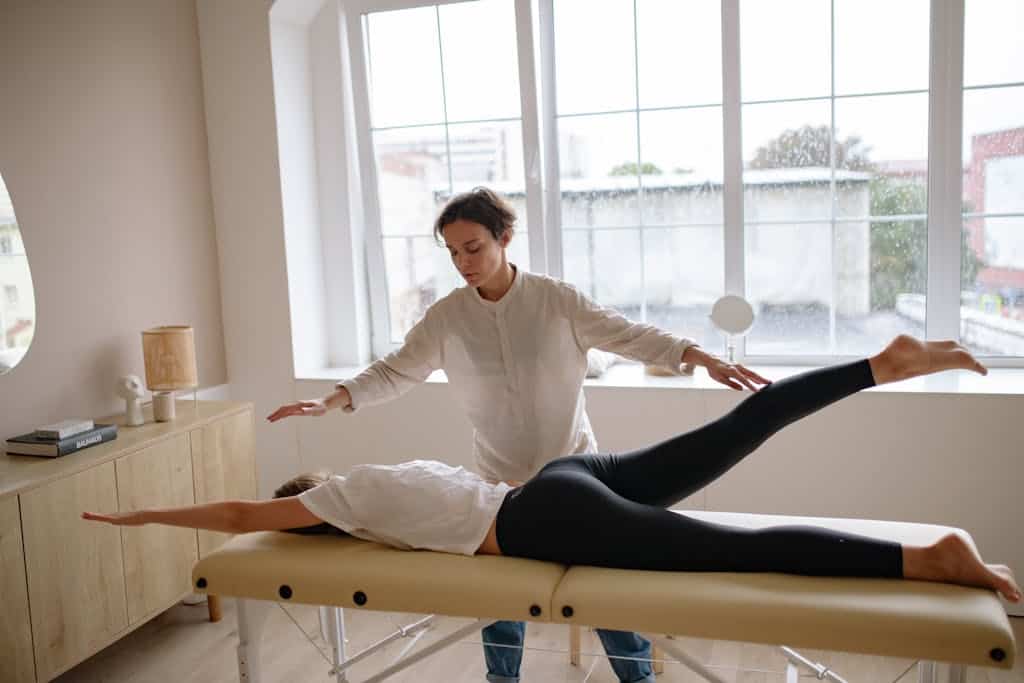
Habit 6: Use Body Weight, Not Muscle – Position your body so gravity does the work. Use your legs and shift body weight rather than pushing with arms. This separates 5-year careers from 20-year careers.
Habit 7: Move Around the Table – Repositioning yourself prevents spine rotation and shoulder strain. According to 2026 studies, improper reaching causes 28% of lower back injuries in massage therapy.
Strategic Scheduling for Career Longevity
Smart scheduling is one of the most practical ways to extend your massage therapy career.
Habit 8: Cap Daily Sessions at 4-5 Maximum – Successful long-term therapists typically see 15-20 clients weekly. My sweet spot is three clients daily—it lets me give excellent work while protecting my body.
Habit 9: Vary Session Types – Alternate between deep tissue and lighter modalities. Mix body positions throughout the day. Three deep tissue sessions back-to-back is a recipe for injury.
Habit 10: Build 15-20 Minute Buffers – Use this time to shake out hands, stretch, and mentally reset. I book 45 minutes between clients, which has been crucial in my 17+ year career.

The Self-Care That’s Non-Negotiable
Therapists who treat self-care as optional typically burn out within 5-7 years. Those who prioritize it often work 20+ years.
Habit 11: Bi-Weekly Bodywork – This is a business necessity, not a luxury. Industry data shows therapists who receive regular bodywork have 45% longer careers.
Habit 12: Strength Training 2-3x Weekly – Twenty to thirty minutes of targeted exercises protects vulnerable joints. Focus on rotator cuffs, wrists, grip, and posterior chain.
Habit 13: Flexibility Work – Pilates or focused stretching routines twice weekly address asymmetries and improve body awareness that translates to better mechanics.
Habit 14: Preventive Healthcare – Quarterly check-ups with chiropractors or PTs catch problems early. Prevention is cheaper than rehabilitation.

Nutrition and Hydration for Recovery
Habit 15: Anti-Inflammatory Diet – Omega-3s, colorful vegetables, and berries reduce joint pain and improve recovery. Some therapists use creatine supplementation (3-5g daily) for muscle recovery, though research specific to massage therapy is limited.
Habit 16: Drink 8-10 Glasses Daily – Dehydrated muscles fatigue faster. I add half a teaspoon of sea salt to a liter of water each morning for electrolytes.
Habit 17: Adequate Protein – Distribute protein throughout the day to fuel muscle repair and recovery.

Mental and Emotional Sustainability
According to 2026 surveys, 42% of therapists who leave cite emotional burnout as a contributing factor.
Habit 18: Set Clear Boundaries – Have written policies about scheduling, late arrivals, and cancellations. Enforce them consistently. Boundaries allow you to extend your massage therapy career.
Habit 19: Take Regular Time Off – One full week per quarter minimum, plus one weekly admin/wellness day. Develop interests outside massage to prevent enmeshment and burnout.

Strategic Continuing Education
Choose education that supports both earning potential and physical sustainability to extend your massage therapy career.
Learn less demanding modalities like craniosacral therapy, lymphatic drainage, or energy work. These command the same rates with less physical force. Business education often provides better ROI than technique training—learning to price appropriately and market effectively reduces the need for high-volume work.
Specializations like oncology or prenatal massage often involve gentler techniques. Tool integration (percussion devices, cupping, hot stones) reduces repetitive hand strain while delivering results.
Building a Sustainable Practice Model
Therapists who successfully extend their massage therapy career transition from hourly work to models with package deals and memberships.
Price for fewer sessions at higher rates. Many experienced therapists work 15-20 hands-on hours weekly and earn more than they did at 30+ hours. Develop multiple income streams through teaching, online courses, or building a multi-therapist practice. According to 2026 data, therapists with diversified income have 60% less financial stress and 50% longer careers.
Frequently Asked Questions
1. How long does the average massage therapy career last in 2026?
Current data shows the average is 5-7 years, with physical burnout being the primary exit reason. However, therapists who implement proper self-care, body mechanics, and strategic scheduling can extend their massage therapy career to 20+ years. The key is consistent daily habits prioritizing sustainability.
2. How many massage sessions per day is safe for career longevity?
To extend your massage therapy career, cap yourself at 3-5 clients daily or 15-20 weekly. Higher volumes (6-8 daily) dramatically increase injury risk and shorten careers. The exact number varies by technique intensity and your conditioning.
3. What are the most common career-ending injuries?
Carpal tunnel syndrome, wrist tendonitis, rotator cuff injuries, lower back pain, and thumb injuries account for approximately 65% of early exits. Most are preventable through proper mechanics, warm-ups, strength training, and limited session volumes.
4. Is receiving regular massage necessary to extend my career?
Yes. Bi-weekly sessions address developing problems before they become chronic. Industry data shows therapists receiving regular bodywork have 45% longer careers. Many trade services or budget it as a business expense.
5. What role does nutrition play in career longevity?
Anti-inflammatory diets reduce joint pain and improve recovery. Adequate hydration (8-10 glasses) prevents muscle fatigue. Sufficient protein supports repair. Some use supplements like creatine for recovery, though you should consult a healthcare provider first.
6. Should I focus on techniques or business skills?
Balance both strategically. Business education allows you to earn more with fewer hands-on hours. Learning less demanding modalities gives options to reduce intensity while maintaining income. Choose education supporting both earnings and physical sustainability.
7. How important is strength training for career longevity?
Extremely important. Therapists doing regular strength training 2-3x weekly experience notably fewer injuries. Focus on rotator cuffs, wrists, grip, and posterior chain. Just 20-30 minutes creates protective musculature for vulnerable joints.
8. Can I extend my career in a spa setting?
Yes, but it requires vigilance. Spas often demand higher volumes. Negotiate adequate buffers (15-20 minutes), vary session types, and don’t exceed your daily maximum. Many transition to private practice for more scheduling control.
9. What are warning signs of burnout?
Persistent pain, dreading work, emotional exhaustion, declining passion, increasing injuries, and client resentment. Physical signs include wrist, thumb, shoulder, and lower back problems worsening over time. Immediate action is critical.
10. Is it too late if I’m already experiencing pain?
Not too late, but immediate action is required. Seek professional assessment, then implement the 19 habits: reduce client load, improve mechanics, start strength training, receive bodywork, and take adequate time off. Many successfully extend their massage therapy career after pain by making these changes.
The Bottom Line
Learning how to extend your massage therapy career requires building a comprehensive system of 19 daily habits addressing physical sustainability, emotional wellness, and business strategy.
Therapists working 20+ years treat their careers as marathons. They invest in wellness, set boundaries, price appropriately, and adapt as their bodies change. The daily choices you make today compound over years into either a sustainable career or a short one.
Career longevity depends on consistent small actions, not occasional heroic efforts. When you successfully extend your massage therapy career, you continue serving clients and making a difference for decades, not just a few years. With 15-18% employment growth projected through 2034, there’s never been a better time to invest in strategies that protect your health while meeting growing demand.
⚠️ Affiliate Disclosure: This article could contain affiliate links to products I recommend. If you purchase through these links, I may earn a small commission at no additional cost to you. As a registered massage therapist with 17+ years of experience, I only recommend products I personally use or genuinely believe will benefit your health and wellness. All opinions and recommendations are based on my professional expertise and clinical experience.
About the Author

Steph Swarts, RMT, CNP
Steph Swarts is a registered massage therapist and certified naturopathy practitioner with 17+ years of clinical experience helping clients optimize their health through evidence-based supplementation and holistic wellness strategies.
Professional Credentials:
- Registered Massage Therapist (RMT) – Licensed in Ontario, Canada
- Certified Naturopathic Practitioner (CNP)
- Raindrop Technique Practitioner (RTP)
- 17+ years in clinical practice
- Specialized training in Prenatal Massage Therapy
Clinical Expertise:
“As a healthcare professional with naturopathic training, I evaluate supplements using the same rigorous standards I apply in client care. My recommendations prioritize:
✅ Safety: Thorough evaluation of quality and purity
✅ Evidence: Backed by peer-reviewed research
✅ Clinical relevance: Real-world effectiveness for performance and recovery
✅ Professional standards: Third-party testing and manufacturing quality
Over 17+ years, I’ve guided hundreds of clients through their health journey, injury recovery, and overall wellness. Every recommendation reflects my professional commitment to evidence-based natural health.
Professional Memberships:
- Registered Massage Therapist with CMTO
- Member of RMTAO
- Certified Naturopathy Practitioner with NCCAP, CPD, and CMA
- Raindrop Technique Practitioner with Institute Of Energy Wellness Studies
📧 Contact: stephaniejswarts.rmt@gmail.com
🌐 Website: www.stephswarts.com
📱 Social: https://www.facebook.com/StephanieJSwarts
Professional Disclaimer: Information provided is for educational purposes based on clinical expertise and current research. This does not replace individualized medical advice. Consult your healthcare provider before starting any supplement regimen, especially if you have pre-existing conditions or take medications.


