**By Steph Swarts, RMT, CNP** *Registered Massage Therapist | Certified Naturopathic Practitioner* 📅 Last Updated: December 21, 2025 ✅ Evidence-based recommendations from a licensed healthcare professional
When I first heard about creatine, I hesitated to start taking it as I didn’t want to “get bulky.” However, I was misinformed, and later discovered that not only is creatine supplementation good for me as a woman heading into my 40s, but it actually became transformative to my career as a registered massage therapist. The one thing I’ll tell you upfront: there’s a gap between what we know creatine does in general and what’s been specifically studied for our profession. So this article focuses on why every massage therapist needs creatine, simply because I have discovered for myself this to be such an enhancement to my overall work. But we will dig into the science of why I believe this to be true, too.
Understanding Why a Massage Therapist Needs Creatine
Here’s something most people don’t realize until they’re actually doing this work – massage therapy is physically demanding in ways that add up over time. The repetitive nature of what we do takes its toll, even when you’re careful about body mechanics. That’s exactly why many massage therapists are starting to explore whether a massage therapist needs creatine supplementation.
Research on work-related musculoskeletal disorders among massage therapists shows injury rates ranging from about 60-80% over the course of a career, depending on which study you look at. Career length statistics vary pretty widely, but many therapists report physical limitations affecting how long they can sustain full-time practice. These are the kind of statistics that make you wonder if every massage therapist needs creatine as part of their self-care routine.
Your hands, wrists, and forearms tend to take the biggest hit. I’ve watched talented therapists have to cut back their client load or switch away from deep tissue work because their bodies couldn’t handle it anymore.
When you’re doing 4-6 hours of actual hands-on work, your muscles are working continuously. You’re applying sustained pressure, using your body weight, engaging your core, and holding awkward positions for extended periods. That kind of sustained muscular effort is taxing in ways that are different from traditional exercise, which is one reason why the conversation about whether a massage therapist needs creatine keeps coming up in professional circles.
What Is Creatine and How Does It Work?
Before we can answer whether a massage therapist needs creatine, we should understand what it actually does. Creatine is a compound that your body makes naturally, primarily in your liver and kidneys. It’s stored in your muscles, helping them produce energy. You also get some from eating meat and fish – about 1-2 grams per day if you eat these foods regularly – but that’s generally not enough to maximize your muscle stores.
Here’s the basic science: Your muscles use ATP (adenosine triphosphate) for energy. Think of ATP as the actual currency your muscle cells spend to contract and do work. The problem is your body only stores enough ATP for roughly 10 seconds of maximum effort.
Creatine supplementation increases your muscles’ phosphocreatine stores. Phosphocreatine donates a phosphate group to regenerate ATP during high-intensity or sustained muscular work. This process happens really fast – we’re talking milliseconds – which is why creatine is particularly helpful for activities that require repeated bursts of effort or sustained muscular contractions. This mechanism is central to understanding why a massage therapist needs creatine.
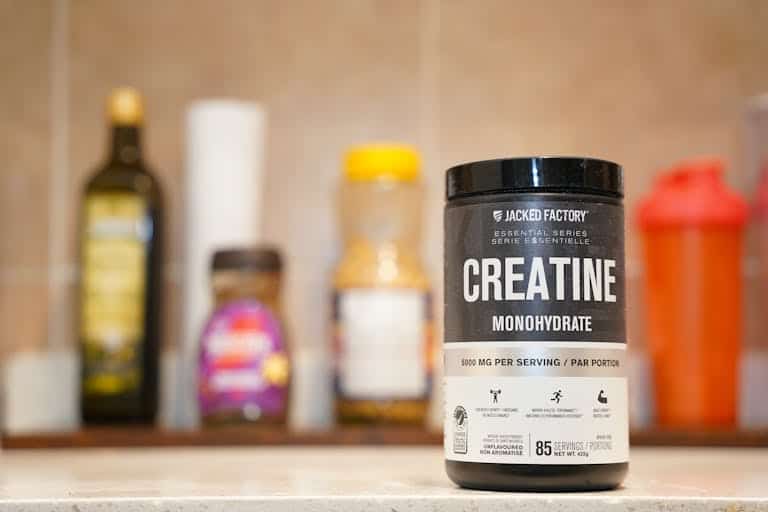
Most people use creatine monohydrate because it’s been studied the most extensively. We’re talking hundreds of studies over several decades. There are other forms out there like creatine HCL or buffered creatine, but monohydrate is cheaper and the research doesn’t show other forms are significantly more effective.
And let me just clear this up right now – creatine is NOT a steroid. It’s not hormonal at all. The International Society of Sports Nutrition considers creatine monohydrate “the most effective ergogenic nutritional supplement currently available” for improving high-intensity exercise capacity.
Why a Massage Therapist Needs Creatine: The Potential Benefits
Now here’s where I need to be straight with you – there are no published studies specifically examining whether a massage therapist needs creatine supplementation. None. What we have is research on creatine for muscular endurance, fatigue resistance, and recovery in general populations and athletes. I’m going to walk you through what the research actually shows and where I’m making educated guesses about how it might apply to our work.
Muscular endurance is probably the most relevant benefit when considering why a massage therapist needs creatine. Multiple studies have shown that creatine supplementation improves performance in activities requiring repeated muscular contractions. A meta-analysis of 22 studies found that creatine supplementation improved muscular endurance by approximately 12% compared to placebo. For massage therapists, this could theoretically translate to maintaining consistent pressure and technique quality throughout the day, though this hasn’t been directly tested.
Grip strength has been studied with creatine, though results are mixed. Some studies show improvements in hand grip strength with supplementation, while others don’t. One study in older adults found a 5% improvement in grip strength after 12 weeks of creatine plus resistance training. But we can’t say with certainty that every massage therapist needs creatine for grip strength improvements, especially since our grip demands are different from squeezing a dynamometer in a lab.
Recovery between bouts of exercise is where creatine has solid research backing. Studies consistently show that creatine helps reduce muscle damage markers and speeds recovery between training sessions. Whether this translates to recovery between clients or between workdays is an open question, but it’s another reason why many believe a massage therapist needs creatine. My personal experience suggests it helps, but that’s anecdotal evidence, not scientific proof.
The cognitive benefits of creatine are real but shouldn’t be overstated. Research shows creatine supplementation can improve performance on cognitive tasks, particularly under conditions of sleep deprivation or mental fatigue. A 2018 review found small but significant effects on short-term memory and reasoning. This is another dimension to consider when asking if a massage therapist needs creatine.
Here’s what I can’t claim with confidence: that a massage therapist needs creatine to prevent repetitive strain injuries. While creatine supports overall muscle function, there’s no direct research showing it prevents occupational repetitive strain injuries. Proper body mechanics, adequate rest, and appropriate strengthening exercises are still your primary injury prevention tools.
How a Massage Therapist Needs Creatine: Dosing and Timing
If you’ve decided that you as a massage therapist needs creatine, the standard evidence-based recommendation is 3-5 grams of creatine monohydrate daily. This maintenance dose will fully saturate your muscles over about 3-4 weeks of consistent use.
Some people do a “loading phase” where they take 20 grams per day (split into 4 doses of 5 grams) for 5-7 days, then drop to maintenance. Loading saturates your muscles faster – in about a week instead of a month – but it’s not necessary. I skipped it and just went straight to 5 grams daily.
Timing really doesn’t matter much. Research shows timing is far less important than daily consistency. Creatine works by building up in your muscles over time, not by giving you an acute boost. I take mine in the morning with breakfast because that’s when I’m least likely to forget.
You can mix creatine with pretty much anything – water, juice, coffee, smoothies. It doesn’t dissolve perfectly, but that’s normal.
Here’s the important part – you need to increase your water intake when you recognize that a massage therapist needs creatine supplementation. Creatine pulls water into your muscle cells, which is part of its mechanism, but it means you need more overall hydration. I aim for at least 80-100 ounces of water daily, more on busy work days.
In the first few weeks, expect to gain 2-4 pounds from water retention. This is completely normal and is not fat gain – it’s your muscles holding more water.
Long-term safety: Multiple studies have followed people taking creatine daily for up to 5 years without finding significant adverse effects in healthy individuals. The International Society of Sports Nutrition states that creatine monohydrate is safe for long-term use when taken at recommended doses.
About 20-30% of people are “non-responders” to creatine, meaning they don’t get significant benefits from supplementation. This usually happens in people who already have naturally high muscle creatine stores. If you supplement consistently for 6-8 weeks and don’t notice any difference, you might be a non-responder. This is important to remember when evaluating whether you specifically as a massage therapist needs creatine.
What Else a Massage Therapist Needs: Creatine Isn’t Everything
I want to be really clear about something: even if a massage therapist needs creatine, it’s not magic, and it’s not a substitute for the fundamentals.
Proper body mechanics are still number one. No supplement will save you if your technique is destroying your body. Learning to use your body weight instead of muscular force for deep pressure, maintaining neutral wrist positions, and using proper leverage – these matter way more than whether a massage therapist needs creatine or not.
Strength training specifically for massage therapists is huge. Exercises that target grip strength, forearm endurance, shoulder stability, and core strength make a real difference. Things like farmer’s carries, dead hangs, wrist curls, and rotator cuff work have been game-changers for me.
Protein intake matters for muscle recovery and maintenance. General recommendations for physically active people are around 0.7-1.0 grams of protein per pound of body weight daily. When you’re using your muscles professionally, you need more than sedentary recommendations.
Other supplements that might complement the discussion of whether a massage therapist needs creatine include magnesium, vitamin D, and omega-3 fatty acids. But these are supplements – meaning they supplement an already solid foundation of good nutrition, hydration, sleep, and recovery practices.
Potential Side Effects When a Massage Therapist Needs Creatine
The most common side effect when a massage therapist needs creatine and starts supplementing is water retention and weight gain – usually 2-4 pounds. This is water in your muscles, not fat accumulation.
Digestive upset happens to some people, usually stomach cramping or diarrhea. This is more common with the loading phase or large doses on an empty stomach. If this happens, try taking smaller doses with food or switching to micronized creatine monohydrate.
Who should avoid creatine? Anyone with existing kidney disease should not take creatine without medical supervision. While research shows it doesn’t harm healthy kidneys, it can be problematic if kidney function is already compromised. Pregnant or breastfeeding women should avoid creatine since there isn’t enough research in these populations to confirm safety. So not every massage therapist needs creatine – some should avoid it entirely.
Talk to your healthcare provider before starting supplements, especially if you take medications or have health conditions.
Quality matters when buying supplements. Look for products that are third-party tested by organizations like NSF International, Informed-Choice, or USP. Creatine monohydrate is one of the most affordable supplements available – a 3-4 month supply costs $15-25.
The Bottom Line: Does a Massage Therapist Need Creatine?
After consistent creatine use, I genuinely believe it’s been helpful for managing the physical demands of my work. Whether a massage therapist needs creatine is not the ultimate answer to career longevity in massage therapy, though. Proper technique, adequate rest, appropriate strengthening, good overall health habits – these are the answer. But as one tool in a comprehensive self-care strategy, creatine has earned its place in my routine.
What I do know is that the research on creatine for muscular endurance and recovery is solid. The safety profile is well-established. The cost is minimal. And the potential benefits align well with what we need as massage therapists, even though direct research specifically examining whether a massage therapist needs creatine doesn’t exist yet.
If you’re a massage therapist dealing with fatigue, struggling to maintain your technique quality throughout the day, or worried about how long you can sustain this career physically, exploring whether you as a massage therapist needs creatine might be worth it. Just go into it with realistic expectations, give it at least 6-8 weeks of consistent use to evaluate it properly, and don’t expect miracles.
Talk to your doctor, especially if you have any health conditions or take medications. Start with a simple creatine monohydrate from a reputable brand. Take 3-5 grams daily with plenty of water. Track how you feel over the next couple months.
Your hands are your tools and your livelihood. Taking care of them – and the rest of your body – isn’t optional if you want a long career in this field. Whether you decide that you as a massage therapist needs creatine or not, the important thing is that you’re thinking proactively about supporting your body through this demanding work.
About the Author

Steph Swarts, RMT, CNP
Steph Swarts is a registered massage therapist and certified naturopathy practitioner with 17+ years of clinical experience helping clients optimize their health through evidence-based supplementation and holistic wellness strategies.
Professional Credentials:
- Registered Massage Therapist (RMT) – Licensed in Ontario, Canada
- Certified Naturopathic Practitioner (CNP)
- Raindrop Technique Practitioner (RTP)
- 17+ years in clinical practice
- Specialized training in Prenatal Massage Therapy
Clinical Expertise:
“As a healthcare professional with naturopathic training, I evaluate supplements using the same rigorous standards I apply in client care. My recommendations prioritize:
✅ Safety: Thorough evaluation of quality and purity
✅ Evidence: Backed by peer-reviewed research
✅ Clinical relevance: Real-world effectiveness for performance and recovery
✅ Professional standards: Third-party testing and manufacturing quality
Over 17+ years, I’ve guided hundreds of clients through their health journey, injury recovery, and overall wellness. Every recommendation reflects my professional commitment to evidence-based natural health.
Professional Memberships:
- Registered Massage Therapist with CMTO
- Member of RMTAO
- Certified Naturopathy Practitioner with NCCAP, CPD, and CMA
- Raindrop Technique Practitioner with Institute Of Energy Wellness Studies
📧 Contact: stephaniejswarts.rmt@gmail.com
🌐 Website: www.stephswarts.com
📱 Social: https://www.facebook.com/StephanieJSwarts
Professional Disclaimer: Information provided is for educational purposes based on clinical expertise and current research. This does not replace individualized medical advice. Consult your healthcare provider before starting any supplement regimen, especially if you have pre-existing conditions or take medications.